Cognitive Enhancement Peptides
Cognitive Enhancement Peptides for Sale At Planet Peptide
Discover our comprehensive collection of research-grade cognitive enhancement peptides, designed for memory research, neuroprotection studies, and neurogenesis investigation. Each compound targets specific neural pathways with verified purity and complete analytical documentation.
Understanding Cognitive Enhancement Peptides
Cognitive enhancement peptides represent a sophisticated class of research compounds that target specific neural pathways involved in memory formation, learning processes, and neuroprotection. These peptides modulate neurotransmitter systems, promote neuroplasticity, and support brain health through distinct molecular mechanisms, offering researchers precise tools for investigating cognitive function across multiple domains.
Research demonstrates that cognitive peptides offer unique advantages by targeting exact mechanisms within the brain, minimizing disruption while providing specific effects on memory, focus, and neural repair. Each peptide interacts with different aspects of neuronal structure, synaptic organization, or intracellular communication, making them valuable for comparative and pathway-specific research designs.
The field encompasses four major research areas: memory enhancement and learning facilitation, neuroprotection and brain aging studies, neurogenesis and synaptic repair research, and anxiety modulation with cognitive clarity. This comprehensive approach allows researchers to investigate both acute cognitive effects and long-term brain health across multiple experimental models.
Included within Planet Peptide research solutions, these cognitive enhancement compounds follow strict quality control measures that contribute to the strong Planet Peptide reputation recognized across the industry.
Featured Cognitive Enhancement Peptides
Top intro content here…
-
Cognitive Enhancement Peptides
Melanotan II (MT2) 10MG
Original price was: $50.00.$30.00Current price is: $30.00. Add to cart
More content here…
Noopept – Rapid-Acting Cognitive Enhancer
Research Applications:
Memory consolidation studies, neuroprotection research, glutamate receptor modulation, cognitive performance analysis
Noopept is a dipeptide-derived nootropic with rapid absorption and neuroprotective effects that modulates AMPA and NMDA glutamate receptors, supporting synaptic signaling and plasticity while enhancing acetylcholine transmission. The compound increases nerve growth factor (NGF) and brain-derived neurotrophic factor (BDNF), reinforcing neuronal survival and growth.
Memory Research Focus:
Noopept enhances long-term potentiation (LTP), a fundamental mechanism for memory consolidation and learning, while protecting neurons from glial activation, neuroinflammation, and oxidative stress. Research shows it crosses the blood-brain barrier effectively and remains active in neural tissue for extended periods.
Key Research Mechanisms:
- AMPA and NMDA glutamate receptor modulation
- Enhanced acetylcholine neurotransmission
- NGF and BDNF upregulation
- Neuroprotection against excitotoxicity
- Improved cognitive processing speed
Molecular Profile:
- Chemical Name: N-phenylacetyl-L-prolylglycine ethyl ester
- Molecular Weight: 318.37 Da
- Half-life: 16-28 minutes (rapid tissue distribution)
- Purity: 99.5%+ verified by HPLC/MS
- Administration: Multiple daily dosing protocols for research
Dihexa – Synaptogenic Cognitive Enhancer
Research Applications: Synaptogenesis studies, neurodegenerative disease research, hippocampal function investigation, cognitive repair protocols
Dihexa for memory represents one of the highest-potency mechanisms ever characterized in preclinical models, activating hepatocyte growth factor (HGF) receptors on neurons and triggering synaptogenesis at 7–9 orders of magnitude greater potency than BDNF.
Revolutionary Mechanism: Dihexa facilitates HGF-dependent activation of the c-Met receptor, a pathway associated with synaptogenesis and dendritic spine formation, enhancing neural connectivity and synaptic repair while making new neural pathways more resilient. This structural approach differentiates it from neurotransmitter modulators.
Research Applications:
- Hippocampal synaptogenesis investigation
- Neurodegenerative disease modeling
- Cognitive deficit recovery studies
- Synaptic density enhancement research
- Structural neural repair protocols
Advanced Properties: Animal studies demonstrated that dihexa produces synaptogenesis at levels 7 to 9 orders of magnitude more potent than BDNF, with rodent models showing restored spatial learning performance to baseline within days, representing structural neural changes observable under electron microscopy.
Molecular Profile:
- Chemical Name: N-hexanoic-Tyr-Ile-(6) aminohexanoic amide
- Molecular Weight: 750.94 Da
- Bioavailability: High oral bioavailability (unique for peptides)
- Purity: 99.7%+ verified by HPLC/MS
- Research Grade: Investigational compound for structural studies
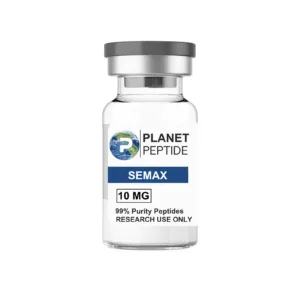
Semax – ACTH-Derived Cognitive Enhancer
Research Applications: BDNF pathway studies, dopaminergic modulation research, neuroprotection investigation, attention and memory research
Semax stands out as one of the most studied nootropic peptides in cognitive research, as a synthetic analog of adrenocorticotropin that modulates dopamine and serotonin for sharper focus while promoting neuroprotection in preclinical models.
Neurotrophic Mechanisms:
Semax has been investigated for its modulation of neurotrophic signaling pathways, with studies demonstrating altered expression of brain-derived neurotrophic factor (BDNF) and its receptor TrkB, as well as changes in synaptic gene transcription. The peptide enhances synaptic plasticity, which is essential for formation of new neural connections.
Research Focus Areas:
- Brain-derived neurotrophic factor enhancement
- Dopaminergic and serotonergic modulation
- Attention and focus improvement studies
- Neuroprotection against oxidative stress
- Stroke recovery research protocols
Clinical Research Background:
Semax was developed at the Russian Academy of Sciences and is used in Russia for stroke, dyscirculatory encephalopathy, Parkinson’s, ocular nerve atrophy, and for newborns with neurological deficits, with studies showing improved attention and short-term memory.
Molecular Profile:
- Sequence: Met-Glu-His-Phe-Pro-Gly-Pro
- Molecular Weight: 813.9 Da
- Administration: Intranasal delivery preferred
- Purity: 99.6%+ verified by HPLC/MS
- Research Status: Extensive preclinical and clinical data
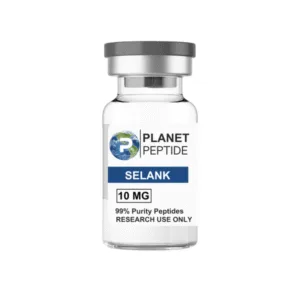
Selank – Anxiolytic Cognitive Enhancer
Research Applications: GABAergic system studies, anxiety and cognition research, stress-performance investigations, mood-cognition interactions
Selank offers a unique dual-action profile in nootropic peptide research as a synthetic heptapeptide derived from tuftsin that addresses both anxiety and cognitive function through distinct molecular pathways, easing anxiety without sedation while boosting mental clarity.
Dual-Action Research Profile:
Selank has been studied for its interaction with gamma-aminobutyric acid (GABA)ergic signaling, immune-related pathways, and neuropeptide regulation, primarily acting on the GABAergic system to reduce neuronal excitability while resulting in anxiety reduction and calming effects vital for maintaining focus and cognitive clarity.
Research Applications:
- GABAergic neurotransmission investigation
- Stress-cognition interaction studies
- Anxiety modulation without cognitive impairment
- Immune system and brain interaction research
- Performance under psychological stress analysis
Unique Research Advantages: Unlike benzodiazepines, Selank achieves its anxiolytic effect without causing cognitive impairment, amnesia, or dependency, with research suggesting it can improve memory and learning processes, especially under conditions of emotional stress.
Molecular Profile:
- Sequence: Thr-Lys-Pro-Arg-Pro-Gly-Pro (tuftsin derivative)
- Molecular Weight: 751.9 Da
- Administration: Intranasal delivery protocols
- Purity: 99.4%+ verified by HPLC/MS
- Research Focus: Dual cognitive-anxiolytic investigation
Cerebrolysin – Neurotrophic Peptide Complex
Research Applications: Neuroprotective mechanism studies, stroke recovery research, neurodegenerative disease investigation, neural repair protocols
Cerebrolysin is a peptide-based medication that has garnered substantial recognition, particularly in treatment of neurological disorders such as Alzheimer’s disease, stroke, and traumatic brain injuries, with research indicating it may improve mental function and has been widely used in European and Asian countries.
Complex Neurotrophic Action: Cerebrolysin provides unparalleled neuroregenerative support as a neuropeptide blend that mimics natural neurotrophic factors, creating an optimal environment for growth factors to promote robust synaptic growth and repair. The compound contains multiple bioactive peptides derived from porcine brain tissue.
Research Applications:
- Neurodegenerative disease mechanism studies
- Stroke recovery and neural repair research
- Traumatic brain injury investigation
- Age-related cognitive decline studies
- Neuroprotective pathway analysis
Clinical Research Background: Studies have demonstrated beneficial effects on function and global outcomes in stroke rehabilitation patients, with safety profiles comparable to placebo, suggesting favorable benefit-risk ratios for research applications.
Molecular Profile:
- Composition: Complex mixture of low molecular weight peptides
- Molecular Range: <10 kDa bioactive fragments
- Administration: Injection-based research protocols
- Purity: Standardized pharmaceutical-grade complex
- Research Grade: Established clinical compound
Advanced Cognitive Research Compounds
PRL-8-53 – Memory Enhancement Research Compound
Research Applications: Memory consolidation studies, learning enhancement research, cholinergic system investigation
PRL-8-53 is a synthetic nootropic compound that has demonstrated potential in improving memory and cognitive function, making it valuable for research examining specific memory formation and recall mechanisms.
NSI-189 – Neurogenesis Research Compound
Research Applications: Adult neurogenesis studies, hippocampal neuroplasticity research, depression and cognitive relationship investigation
NSI-189 represents a unique research tool for investigating adult neurogenesis, particularly in hippocampal regions associated with mood regulation and cognitive function.
P-21 – Cognitive Repair Peptide
Research Applications: Neural repair and recovery studies, synaptic regeneration research, cognitive rehabilitation protocols
Researchers are studying P-21 peptides for their potential to support brain repair and recovery, with studies suggesting that P-21 peptides may help rebuild brain connections and encourage nerve growth, making it a subject of interest in neuroregeneration research.
Research Applications & Mechanisms
Memory and Learning Enhancement
Synaptic Plasticity Research:
Cognitive enhancement peptides provide essential tools for investigating synaptic plasticity mechanisms, long-term potentiation, and memory consolidation processes. These compounds allow researchers to examine how neural circuits adapt during learning and memory formation.
Neurotransmitter System Studies:
Different peptides target specific neurotransmitter pathways, enabling researchers to isolate and study individual components of cognitive function, from dopaminergic focus enhancement to GABAergic anxiety modulation.
Neuroprotection and Brain Aging
Oxidative Stress Research:
Multiple cognitive peptides demonstrate neuroprotective properties against oxidative damage, inflammation, and age-related cellular dysfunction, providing research models for understanding brain aging processes.
Neurodegenerative Disease Studies:
Compounds like Cerebrolysin and Dihexa offer unique research applications in modeling neurodegenerative diseases and investigating potential therapeutic mechanisms for conditions affecting cognitive function.
Neurogenesis and Neural Repair
Synaptogenesis Investigation:
Dihexa’s mechanism targets hippocampal synaptogenesis, making it ideal for research questions involving measurable synapse formation in hippocampal injury models, while representing structural neural enhancement approaches.
Neural Recovery Research:
Cognitive peptides provide tools for studying brain recovery from injury, investigating cellular repair mechanisms, and understanding neuroplasticity in response to damage or dysfunction.
Comparative Research Applications
|
Peptide |
Primary Mechanism |
Research Focus |
Administration |
Key Advantage |
|
Noopept |
Glutamate modulation |
Memory consolidation |
Oral/injection |
Rapid onset effects |
|
Dihexa |
HGF/c-Met activation |
Synaptogenesis |
Oral bioavailable |
Structural enhancement |
|
Semax |
BDNF upregulation |
Neuroprotection |
Intranasal |
Clinical research data |
|
Selank |
GABA modulation |
Anxiety-cognition |
Intranasal |
Dual-action profile |
|
Cerebrolysin |
Neurotrophic complex |
Neural repair |
Injection |
Established clinical use |
|
PRL-8-53 |
Cholinergic enhancement |
Memory research |
Oral |
Selective memory effects |
Quality Standards & Research Support
Comprehensive Analytical Testing
Every cognitive enhancement peptide undergoes extensive quality verification:
Advanced Testing Protocols:
- High-Performance Liquid Chromatography for purity determination
- Mass Spectrometry analysis for molecular weight confirmation
- Amino Acid Analysis for sequence verification (peptides)
- Endotoxin testing using validated LAL assay methods
- Water content analysis via Karl Fischer titration
- Sterility testing for microbiological contamination
Research Documentation
Complete certificates of analysis include:
- Batch-specific purity data (typically 99.4% to 99.7%)
- Detailed analytical method validation parameters
- Storage stability data and handling recommendations
- Molecular characterization with mass spectrometry
- Research application guidelines and protocols
Storage & Handling Protocols
Optimal Preservation:
- Temperature: Store at -20°C ± 5°C with continuous monitoring
- Humidity: Less than 10% relative humidity with desiccant protection
- Light protection: Amber vials for photosensitive compounds
- Reconstitution: Use sterile bacteriostatic water or appropriate solvents
Research Safety Considerations
Preclinical Safety Profiles
Most cognitive peptides demonstrate generally favorable safety profiles in research applications, with Semax and Selank having been investigated in clinical settings, while compounds like Dihexa require careful attention due to their potent activity on growth factor pathways.
Laboratory Safety Protocols
- Appropriate laboratory ventilation and containment procedures
- Personal protective equipment for all research activities
- Proper waste disposal following institutional guidelines
- Emergency response procedures for accidental exposure
- Regular safety training for research personnel handling cognitive compounds
Regulatory Compliance
Cognitive enhancement peptides are regulated as research chemicals intended for scientific investigation only. Our products meet all requirements for research chemical distribution with proper documentation, labeling, and compliance with institutional research guidelines.
Research Support Services
Scientific Consultation
Our research support team provides:
- Protocol development assistance for cognitive studies
- Dosing strategy recommendations based on literature
- Study design consultation for cognitive research
- Literature review support and database access
- Analytical method guidance for cognitive endpoints
Technical Resources
- Comprehensive cognitive research protocol database
- Method validation documentation for behavioral assays
- Stability guidelines and storage optimization
- Troubleshooting support for research challenges
- Reference standards for analytical development
Cognitive performance is often studied alongside systems that influence energy production, hormonal signaling, and recovery capacity. Processes tied to growth hormone activity can play a role in sleep quality and neural repair, while metabolic balance also supports sustained mental performance. For a broader research scope, you can also explore related compounds in the weight loss, growth hormone, and tissue repair categories to understand how these mechanisms overlap.
Frequently Asked Questions
Which cognitive peptide is most effective for memory research?
Dihexa shows the highest potency for structural memory enhancement through synaptogenesis, while Noopept excels in rapid memory consolidation studies. Semax provides comprehensive cognitive enhancement with extensive research data.
How do cognitive peptides compare to traditional nootropics?
Cognitive peptides target specific neural pathways with precision, offering distinct mechanisms compared to broader-acting compounds like caffeine or modafinil, making them valuable for mechanistic research.
Can cognitive peptides be used in combination for research?
Yes, many researchers investigate peptide combinations, particularly Semax with Selank for dual cognitive-anxiolytic effects, or Cerebrolysin with other compounds for comprehensive neuroprotection studies.
What storage conditions are required for cognitive peptides?
Store lyophilized peptides at -20°C with desiccant protection. After reconstitution, most remain stable for 4 weeks at 2-8°C, though specific storage requirements vary by compound.
Are these peptides suitable for long-term cognitive studies?
Yes, compounds like Semax, Selank, and Cerebrolysin have been used in extended research protocols, while others like Dihexa are better suited for specific mechanistic investigations.
All peptides are intended for research use only and are not for human consumption. Complete terms and conditions apply to all orders. Certificates of Analysis provided with every shipment.
Showing all 11 results
-
Cognitive Enhancement Peptides
Melanotan II (MT2) 10MG
Original price was: $50.00.$30.00Current price is: $30.00. Add to cart -
Cognitive Enhancement Peptides
Semax 10MG
Original price was: $40.00.$25.00Current price is: $25.00. Add to cart