Healing & Recovery Peptides
Healing & Recovery Peptides For Sale at Planet Peptide
Discover our comprehensive collection of research-grade healing and recovery peptides, specifically designed for tissue repair, wound healing, and sports medicine applications. Each compound is manufactured to pharmaceutical standards with guaranteed purity verification.
Understanding Healing Peptides
Healing peptides represent a revolutionary class of research compounds that target specific biological pathways involved in tissue regeneration, wound healing, and inflammation resolution. These peptides exert regenerative effects through multiple interconnected pathways, facilitating musculoskeletal and neuromuscular healing through their ability to modulate angiogenesis, inflammation, nitric oxide signaling, and tissue-specific repair.
Research demonstrates that healing peptides offer unique advantages in both tissue repair and sports medicine applications. All studies investigating healing peptides have demonstrated consistently positive and prompt healing effects for various injury types, both traumatic and systemic, across multiple soft tissue types. This broad efficacy makes them invaluable tools for researchers studying regenerative medicine and recovery enhancement.
These healing compounds reflect Planet Peptide quality standards, supported by strict testing protocols and consistent quality control that define our Planet Peptide research peptides.
Featured Healing & Recovery Peptides
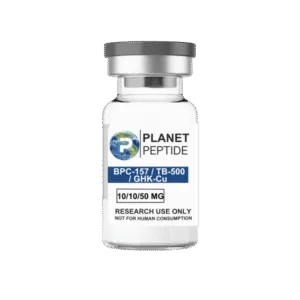
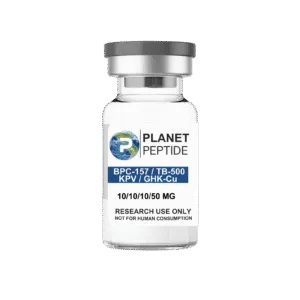
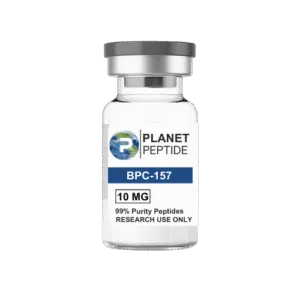
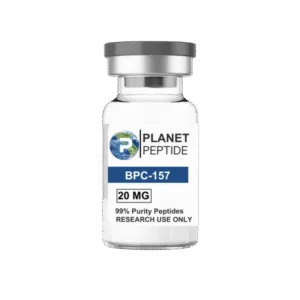
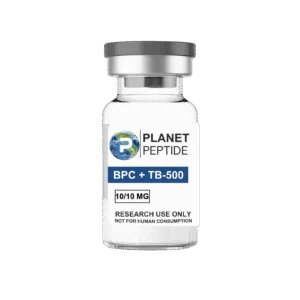
BPC-157 – Body Protective Compound
Research Applications:
Tissue repair studies, wound healing research, gastrointestinal protection, musculoskeletal recovery
BPC-157 significantly promotes angiogenesis by enhancing vascular endothelial growth factor receptor-2 (VEGFR2) activity and nitric oxide (NO) signaling primarily through activation of the Akt-endothelial nitric oxide synthase (eNOS) pathway. This mechanism makes it particularly valuable for research requiring enhanced blood flow to damaged tissues.
Sports Medicine Research Focus:
BPC-157-treated subjects demonstrated significantly improved recovery, as evidenced biochemically and through micro- and macroscopic observations, with biomechanically healed tendons showing increased load to failure and significantly higher functionality. BPC-157 helps promote healing by boosting growth factors and reducing inflammation, with improved outcomes in muscle, tendon, ligament, and bone injury models.
Key Research Mechanisms:
- Enhanced angiogenesis and vascular repair
- Accelerated tendon and ligament healing
- Improved gastrointestinal tract protection
- Anti-inflammatory pathway modulation
- Neuromuscular stabilization effects
Research Applications:
- Tendon rupture and strain studies
- Muscle injury recovery protocols
- Gastrointestinal healing research
- Cardiovascular protection studies
- Neurological recovery investigation
Molecular Profile:
- Sequence: Gly-Glu-Pro-Pro-Pro-Gly-Lys-Pro-Ala-Asp-Asp-Ala-Gly-Leu-Val
- Molecular Weight: 1419.53 Da
- Purity: 99.7%+ verified by HPLC/MS
- Stability: Highly stable in gastric acid for 24+ hours
- Storage: Store at -20°C, protect from light
TB-500 – Thymosin Beta-4 Fragment
Research Applications:
Actin regulation studies, cellular migration research, angiogenesis investigation, systemic tissue repair
TB-500 exhibits unique properties in promoting angiogenesis, cellular migration, and tissue remodeling through its primary mechanism of actin regulation. TB-500 helps with tissue repair, reducing inflammation, and improving flexibility, moving quickly through muscles, joints, and connective tissues to target damaged areas.
Advanced Healing Mechanisms:
TB-500 plays a critical role in actin regulation, a process essential to cell migration, angiogenesis (new blood vessel formation), and tissue regeneration. Research has demonstrated that thymosin beta-4 interacts with key repair pathways that regulate how tissues rebuild after trauma, with evidence linking it to improved healing of ligaments, bone, and skin wounds.
Sports Medicine Applications:
- Enhanced muscle recovery and flexibility
- Improved joint mobility and function
- Accelerated healing from sports injuries
- Reduced inflammation in chronic conditions
- Cardiovascular health support
Research Benefits:
- Systemic tissue repair throughout the body
- Enhanced cellular migration to injury sites
- Improved blood vessel formation
- Reduced recovery time from injuries
- Better flexibility and range of motion
Molecular Profile:
- Structure: 43-amino acid peptide fragment
- Mechanism: Actin polymerization regulation
- Purity: 99.5%+ verified by HPLC/MS
- Half-life: Less than 30 minutes (rapid tissue distribution)
- Storage: Store at -20°C, lyophilized powder
GHK-Cu – Copper Peptide Complex
Research Applications: Collagen synthesis studies, anti-aging research, wound healing protocols, skin regeneration
GHK-Cu represents a unique class of healing peptides that combines the regenerative properties of the GHK tripeptide with the essential trace element copper. This complex demonstrates remarkable efficacy in collagen synthesis stimulation and tissue remodeling research.
Regenerative Properties:
- Enhanced collagen and elastin production
- Improved wound healing and scar reduction
- Stimulation of hair follicle growth
- Anti-inflammatory and antioxidant effects
- Tissue remodeling and regeneration
Research Applications:
- Collagen synthesis investigation
- Wound healing mechanism studies
- Anti-aging pathway research
- Hair follicle regeneration studies
- Skin tissue repair protocols
Molecular Profile:
- Sequence: Gly-His-Lys + Copper(II)
- Molecular Weight: 340.8 Da (complex)
- Purity: 99.3%+ verified by HPLC/MS
- Copper Content: Optimized for biological activity
- Storage: Store at -20°C, protect from moisture
Epithalon – Pineal Peptide
Research Applications: Telomerase activation studies, circadian rhythm research, longevity investigation, cellular aging
Epithalon is a synthetic tetrapeptide that regulates the cell cycle through telomerase activity. Research has demonstrated its potential in cellular aging studies and circadian rhythm regulation, making it valuable for longevity research applications.
Longevity Research Focus:
- Telomerase enzyme activation
- Cellular aging process investigation
- Circadian rhythm regulation studies
- DNA repair mechanism research
- Oxidative stress reduction protocols
Research Applications:
- Telomere length maintenance studies
- Cellular senescence investigation
- Sleep cycle regulation research
- Age-related decline studies
- DNA protection mechanism research
Molecular Profile:
- Sequence: Ala-Glu-Asp-Gly
- Molecular Weight: 390.35 Da
- Purity: 99.4%+ verified by HPLC/MS
- Research Grade: Synthetic bioregulator
- Storage: Store at -20°C, light sensitive
Additional Healing Research Compounds
DSIP (Delta Sleep-Inducing Peptide)
Research Focus: Sleep regulation studies, stress response investigation, recovery enhancement
DSIP plays a crucial role in sleep-wake cycle regulation and stress adaptation, making it valuable for recovery research applications. Studies have demonstrated its potential in improving sleep quality and stress resilience.
Thymalin – Thymic Peptide
Research Applications: Immune system regulation, age-related immune decline, tissue protection
Thymalin supports immune system function and has demonstrated protective effects across multiple tissue types. Research applications include immunomodulation and age-related immune decline studies.
Research Applications & Mechanisms
Tissue Repair Pathways
Angiogenesis Enhancement:
Healing peptides accomplish wound repair through resolution of vessel constriction, primary platelet plug formation, and fibrin mesh stabilization. This comprehensive approach to vascular repair makes them essential tools for tissue regeneration research.
Cellular Migration Mechanisms:
Healing peptides promote cellular migration to injury sites through actin regulation and chemotactic signaling. This process is fundamental to effective tissue repair and regeneration across multiple tissue types.
Sports Medicine Research Applications:
- Muscle strain and tear recovery studies
- Tendon and ligament injury protocols
- Joint health and mobility research
- Exercise-induced inflammation investigation
- Performance recovery enhancement studies
- Chronic injury management research
Tissue Repair Applications:
- Wound healing mechanism investigation
- Scar tissue formation studies
- Burn recovery protocols
- Post-surgical healing research
- Diabetic ulcer treatment studies
- Skin regeneration investigation
Comparative Research Data
|
Peptide |
Primary Mechanism |
Research Focus |
Administration |
Key Advantage |
|
BPC-157 |
VEGFR2/NO pathway |
Gut-tendon healing |
Multiple routes |
Gastric stability |
|
TB-500 |
Actin regulation |
Systemic repair |
Injection |
Whole-body distribution |
|
GHK-Cu |
Collagen synthesis |
Skin regeneration |
Topical/injection |
Copper enhancement |
|
Epithalon |
Telomerase activation |
Longevity research |
Injection/oral |
Cellular aging |
Quality Standards & Research Support
Comprehensive Analytical Testing
Every healing peptide undergoes extensive quality verification:
Advanced Testing Methods:
- High-Performance Liquid Chromatography (HPLC) for purity determination
- Mass Spectrometry analysis for molecular weight confirmation
- Amino Acid Analysis for sequence verification
- Endotoxin testing for bacterial contamination screening
- Water content analysis via Karl Fischer titration
Research Documentation
Complete certificates of analysis include:
- Batch-specific purity data (typically 99.3% to 99.8%)
- Detailed analytical method validation
- Storage stability data and recommendations
- Molecular characterization results
- Research application guidelines
Storage & Handling Protocols
Optimal Preservation:
- Temperature: Store at -20°C ± 5°C
- Humidity: Less than 10% relative humidity
- Light protection: Amber vials for photosensitive compounds
- Reconstitution: Sterile bacteriostatic water recommended
Research Safety Considerations
Preclinical Safety Data
BPC-157 has been employed in clinical trials with no reported toxicity, with LD1 not achieved in safety studies. Phase 1 safety studies of thymosin beta-4 demonstrated good tolerance in healthy volunteers with no dose-limiting toxicities or serious adverse events.
Research Protocols
- Proper laboratory ventilation and handling procedures
- Personal protective equipment for all research activities
- Appropriate waste disposal following institutional guidelines
- Emergency procedures for accidental exposure
- Regular safety training for research personnel
Regulatory Status
Healing peptides are classified as Category 2 bulk drug substances with insufficient evidence for safety and efficacy determination. Our products are genuine research-grade compounds with proper documentation for legitimate scientific applications.
Research Support Services
Scientific Consultation
Our research support team provides:
- Protocol development assistance
- Dosing and administration guidance
- Analytical method recommendations
- Study design consultation
- Literature review support
Technical Resources
- Comprehensive research protocols database
- Method validation documentation
- Stability and storage guidelines
- Troubleshooting support
- Reference standards availability
Tissue repair research focuses on how the body restores function after stress, injury, or inflammation. This process is closely connected to growth hormone activity, which contributes to cellular regeneration and recovery. Metabolic efficiency also plays a supporting role in how the body allocates resources during healing. Reviewing cognitive enhancement and weight loss peptide categories can provide additional insight into how these systems interact in broader biological research.
Frequently Asked Questions
Which healing peptide is most effective for tissue repair research?
BPC-157 shows superior efficacy for gastrointestinal and tendon healing with its VEGFR2 pathway activation, while TB-500 excels in systemic tissue repair through actin regulation.
How fast do healing peptides show effects in research models?
Studies demonstrate consistently positive and prompt healing effects across various injury types, typically within days to weeks depending on the specific application.
Are healing peptides suitable for sports medicine research?
Yes, particularly BPC-157 and TB-500 have extensive research applications in muscle recovery, tendon repair, and performance enhancement studies.
What storage conditions are required for healing peptides?
Store at -20°C in lyophilized form. After reconstitution, use within 4 weeks when stored at 2-8°C.
Do you provide certificates of analysis?
Every batch includes comprehensive COAs with HPLC purity data, mass spectrometry confirmation, and detailed analytical results.
All peptides are intended for research use only and are not for human consumption. Complete terms and conditions apply to all orders. Certificates of Analysis provided with every shipment.
Showing 1–12 of 15 results
-
Healing & Recovery Peptides
BPC-157+TB-500 10/10MG
Original price was: $60.00.$40.00Current price is: $40.00. Add to cart -
Healing & Recovery Peptides
PNC-27 30MG
Original price was: $130.00.$50.00Current price is: $50.00. Add to cart